
Independent Movement
by Regan Becker
“The child who has to sit still listening to a teacher is in the worst possible state of mind and body for learning. Likewise, the child whose life at home is strictly ordered according to the convenience of grown-ups without knowledge or consideration of the natural movement and active interest of childhood is in the worst possible state of mind and body, either for obedience or good manners.” — Dr. Maria Montessori, Maria Montessori Speaks to Parents
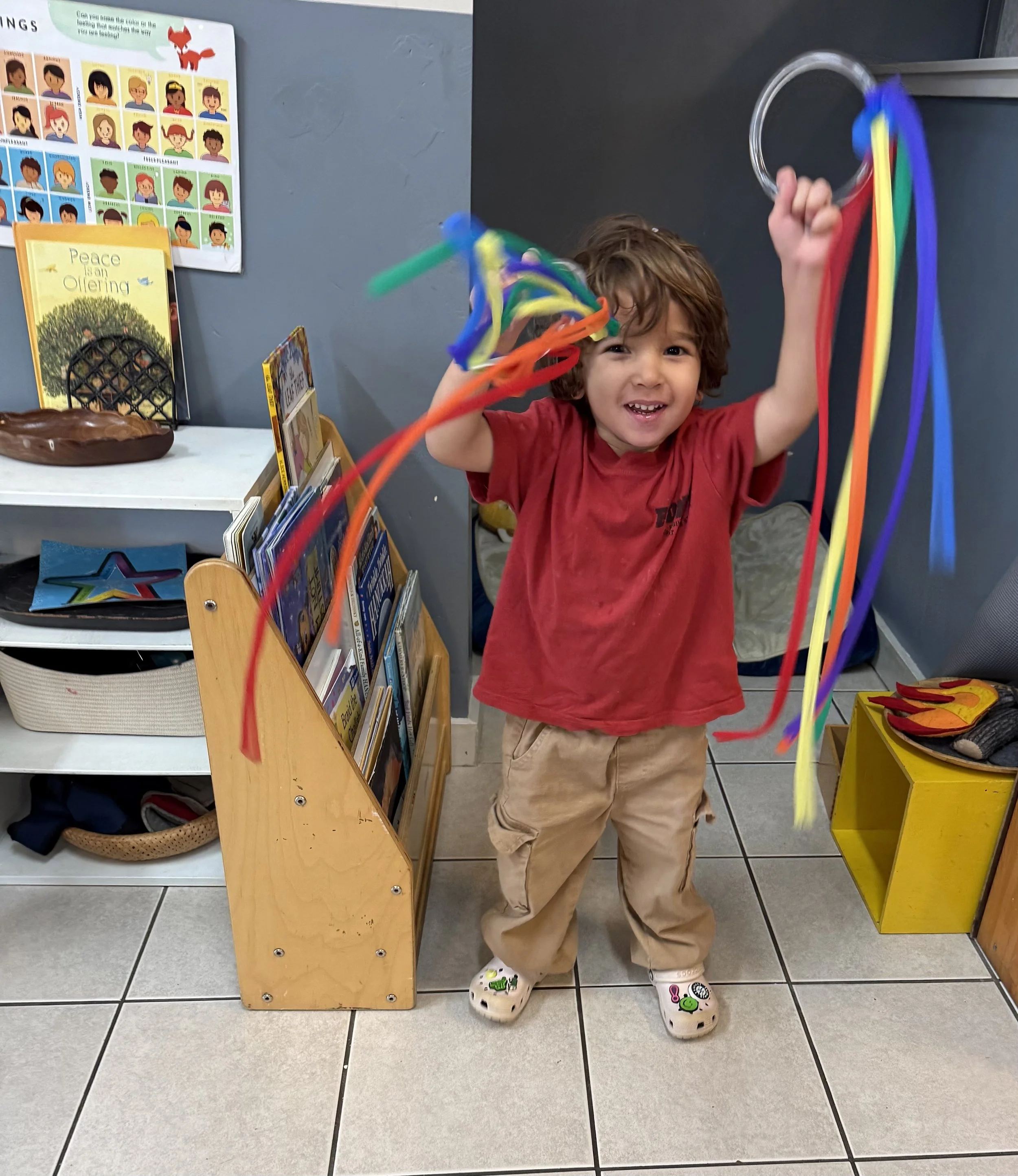
Peace shelf: Rainbow ribbons
“The first aim of the prepared environment is, as far as it is possible, to render the growing child independent of the adult.” – Dr. Maria Montessori
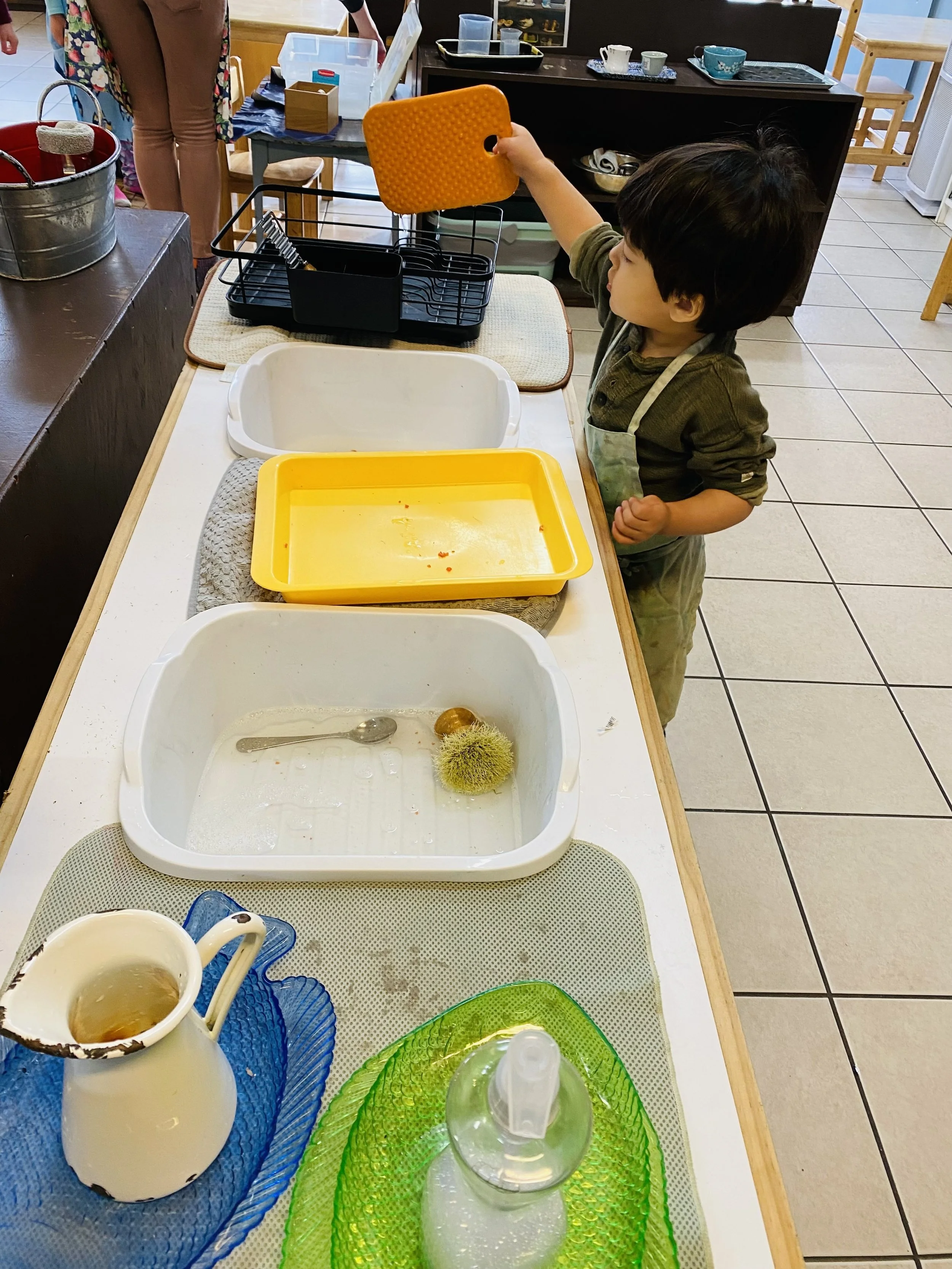
Practical Life: Washing Dishes
"No social problem is as universal as the oppression of the child.” – Dr. Maria Montessori
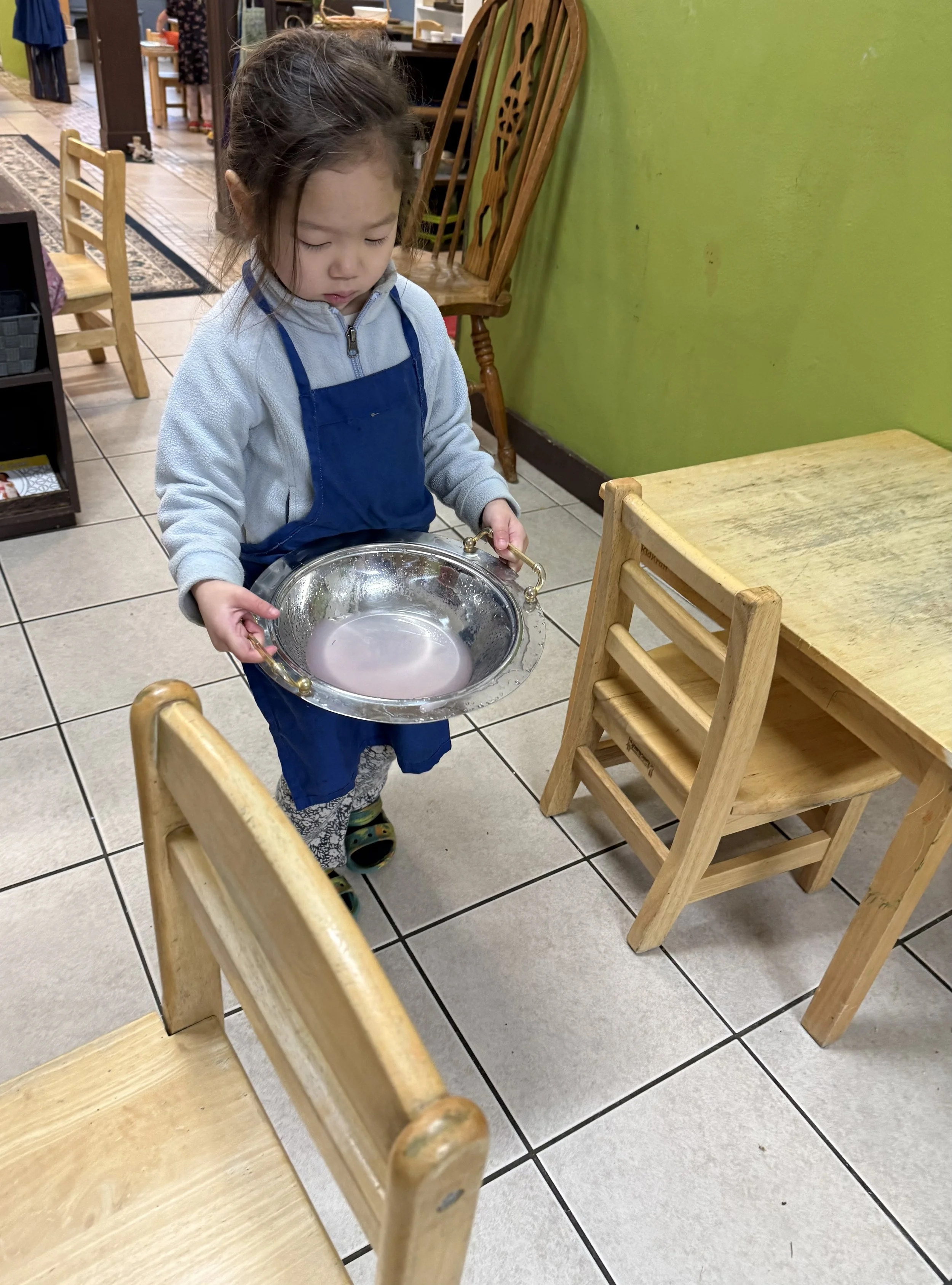
Practical Life: Carrying a Bowl of Water
“Movement of the hand is essential. Little children reveal that the development of the mind is stimulated by the movement of the hands. Children acquire knowledge through experience in the environment. The hand is the instrument of intelligence. The child needs to manipulate objects and to gain experience by touching and handling. ” — Dr. Maria Montessori, The 1946 London Lectures
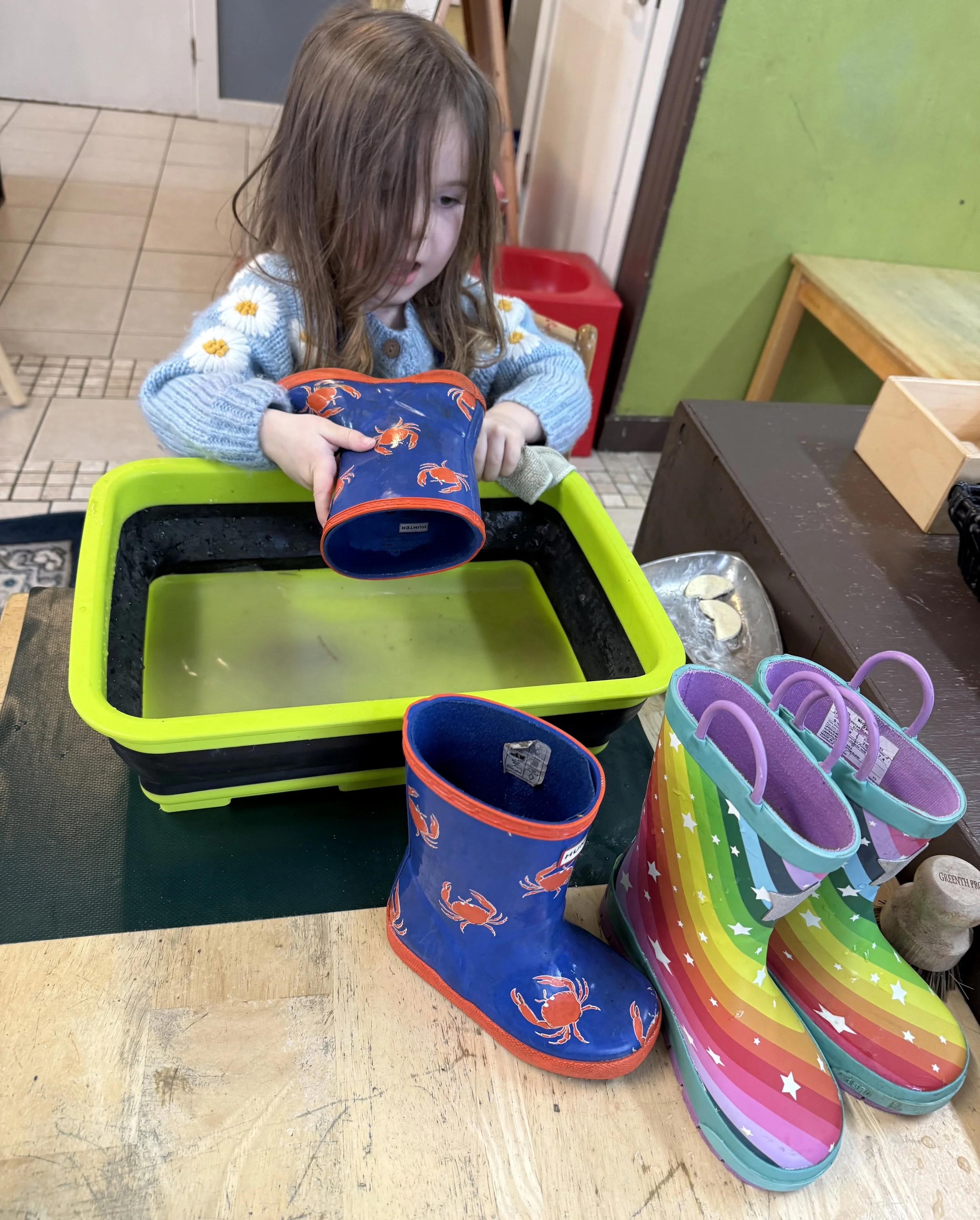
Practical Life: Scrubbing Boots
“He (the child) climbs upstairs and on chairs. He does not climb on chairs in order to sit on them, but just for the sake of climbing. We may wonder why he should make such a great effort if he does not want to enjoy sitting in an armchair once he has got up and into it. But no, he climbs on the seat of the chair, across the arms and down on the floor again. It is a cycle of activity, an effort which brings a special coordination of movement. His purpose is to train himself.” — Dr. Maria Montessori, The 1946 London Lectures
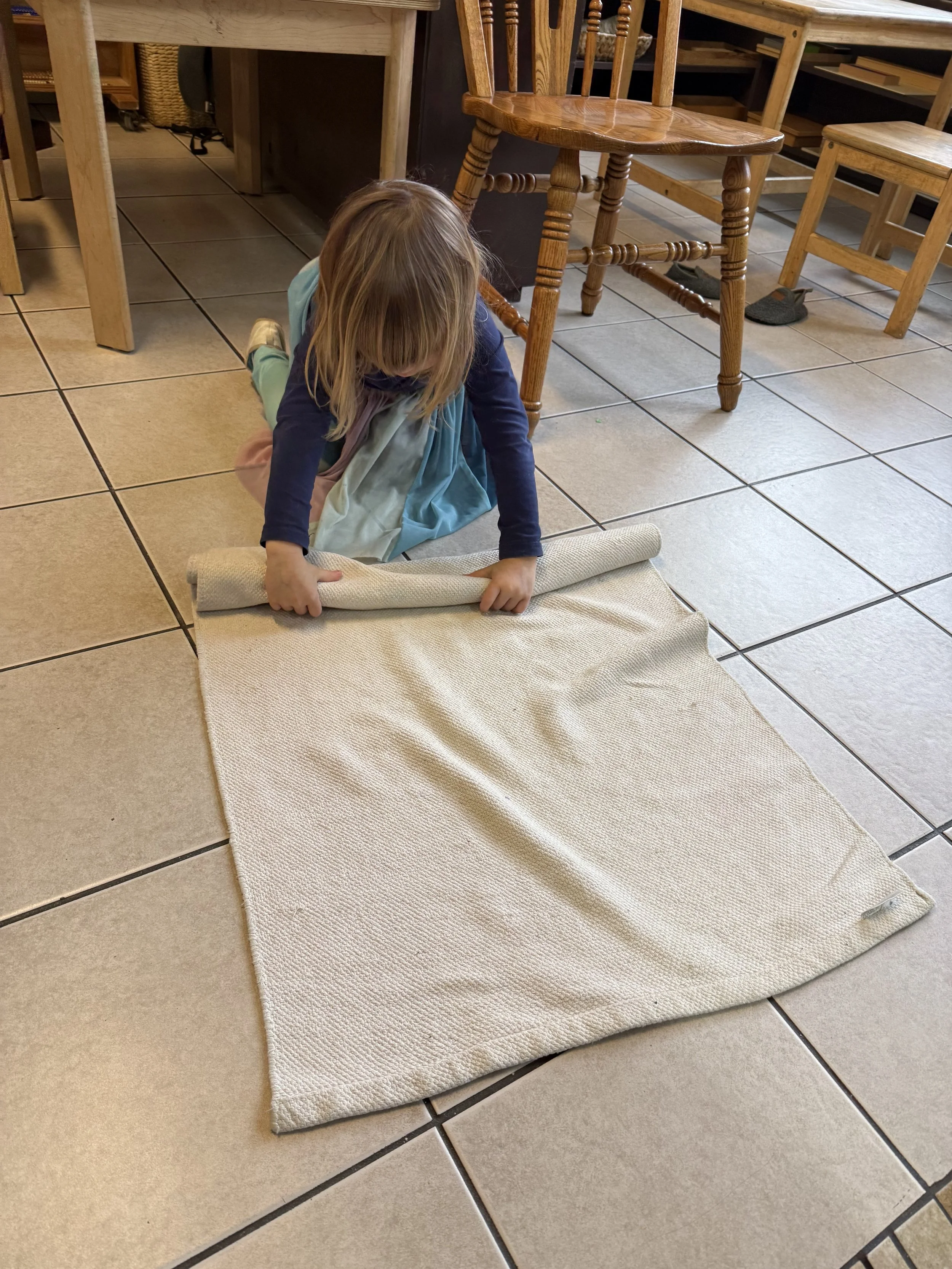
Practical Life: Rolling a Rug
"Free choice is one of the highest of all the mental processes. To give a child liberty is not to abandon him to himself. To let the child do as he likes when he has not yet developed any powers of control is to betray the idea of freedom. The essence of independence is to be able to do something for one’s self. Real freedom is a consequence of the development of latent guides, aided by education.” — Dr. Maria Montessori, The Absorbent Mind
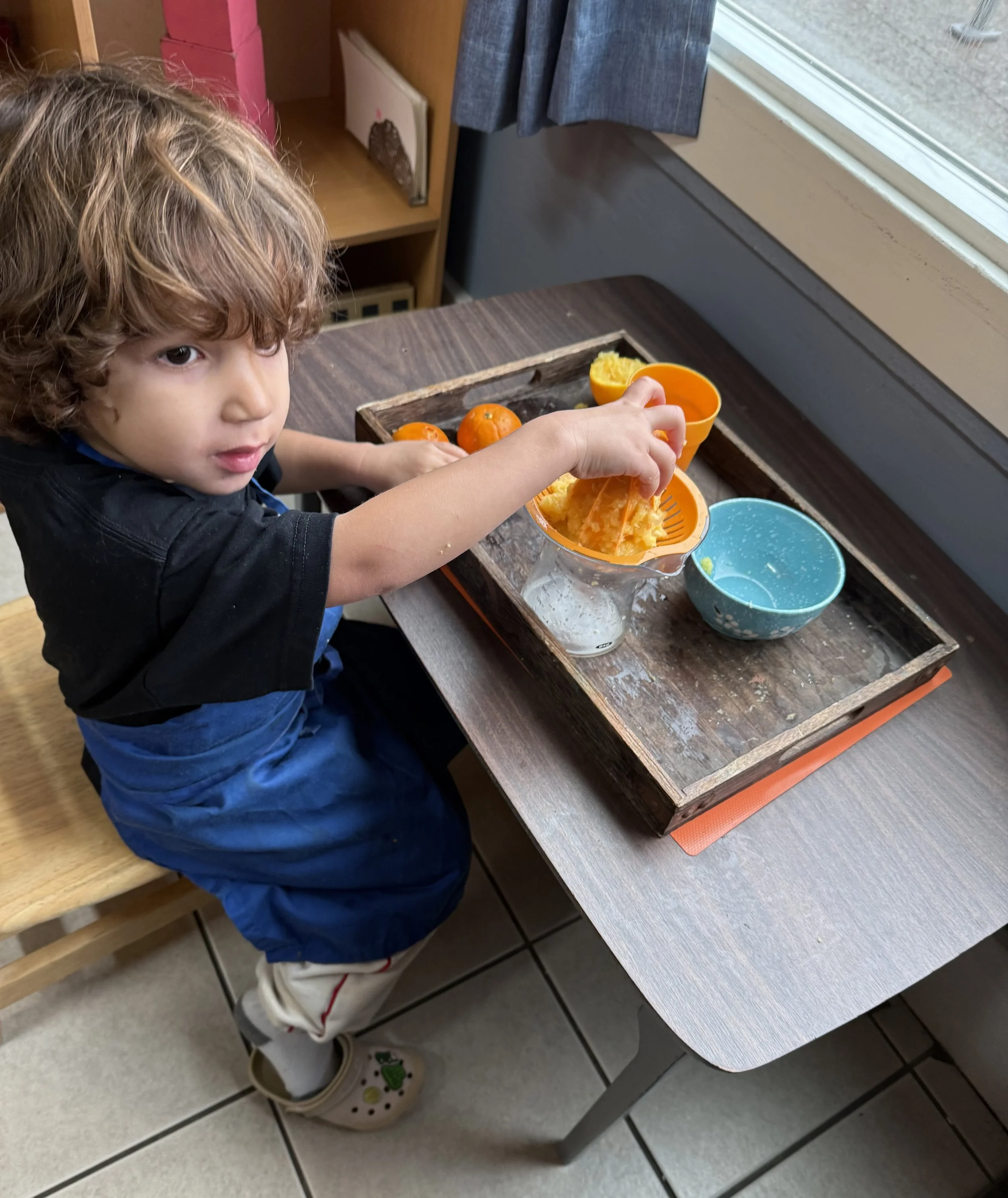
Practical Life: Juicing Oranges
“Do not tell them how to do it. Show them how to do it and do not say a word. If you tell them, they will watch your lips move. If you show them, they will want to do it themselves.” – Dr. Maria Montessori
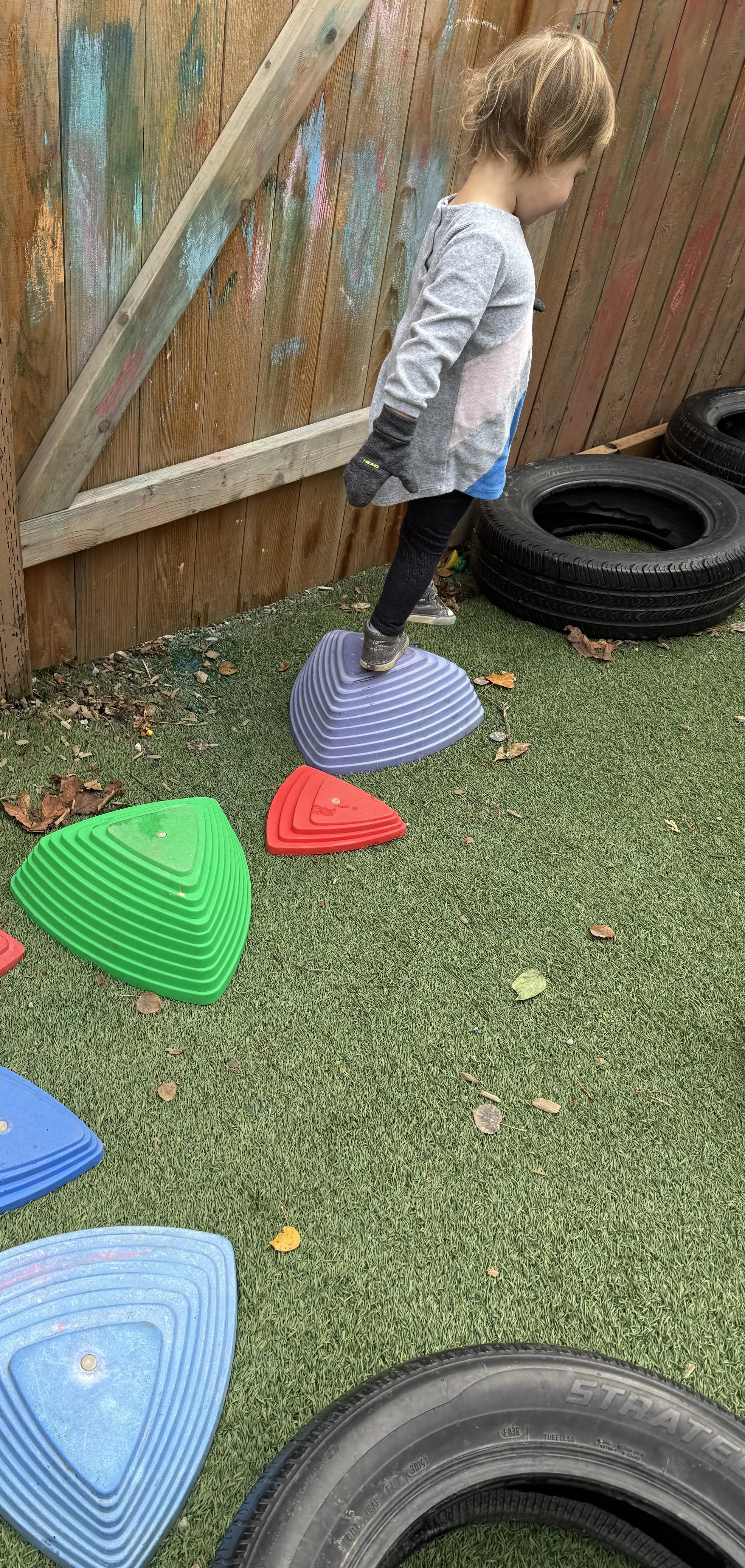
Outdoor Play: Stepping Stones
“The teacher’s task is not to talk, but to prepare and arrange a series of motives for cultural activity in a special environment made for the child.” — Dr. Maria Montessori, The Absorbent Mind
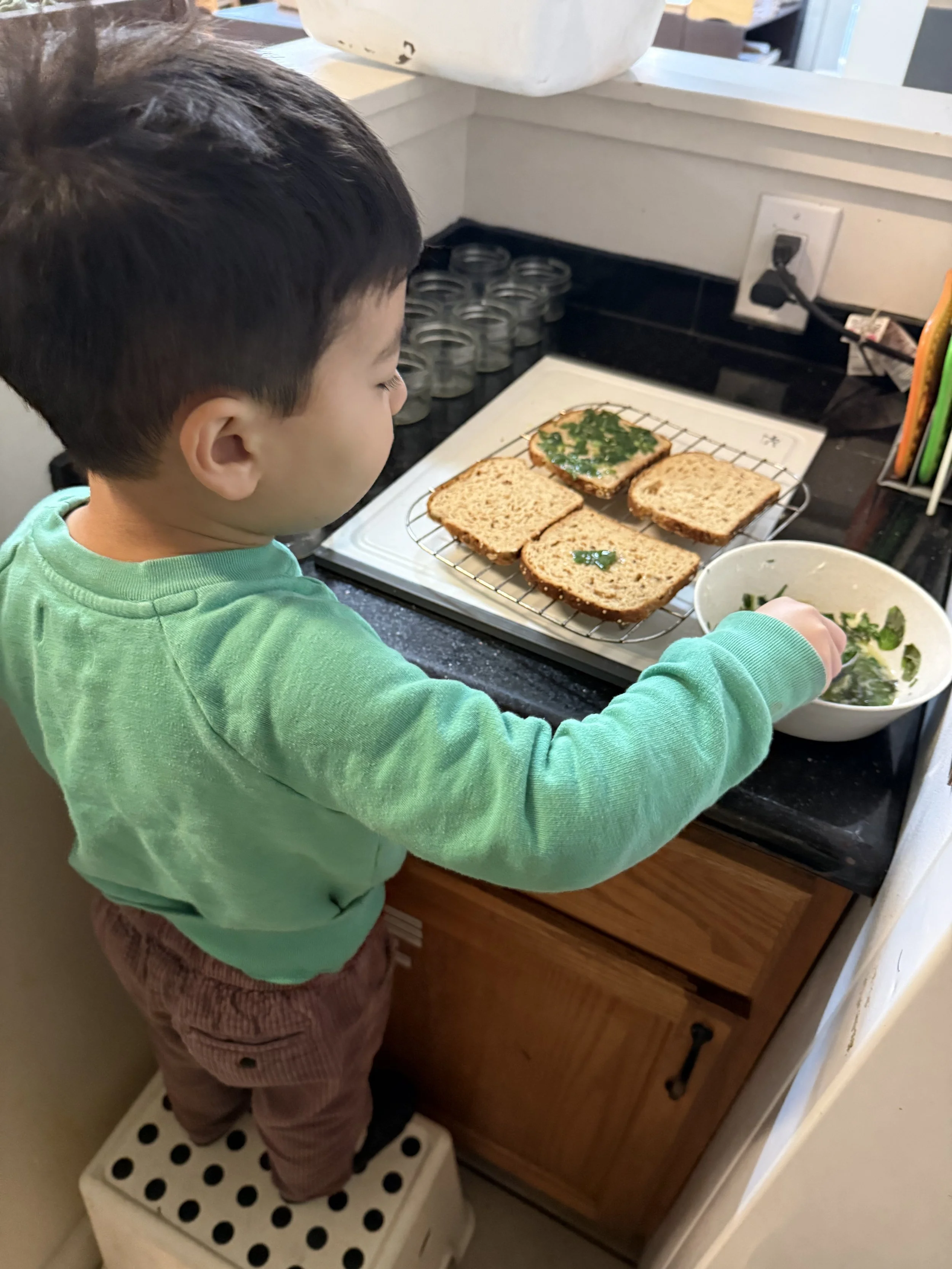
Practical Life: Serving Food
“The task of the educator lies in seeing that the child does not confound good with immobility, and evil with activity, as often happens in old-time discipline.” — Dr. Maria Montessori, The Montessori Method
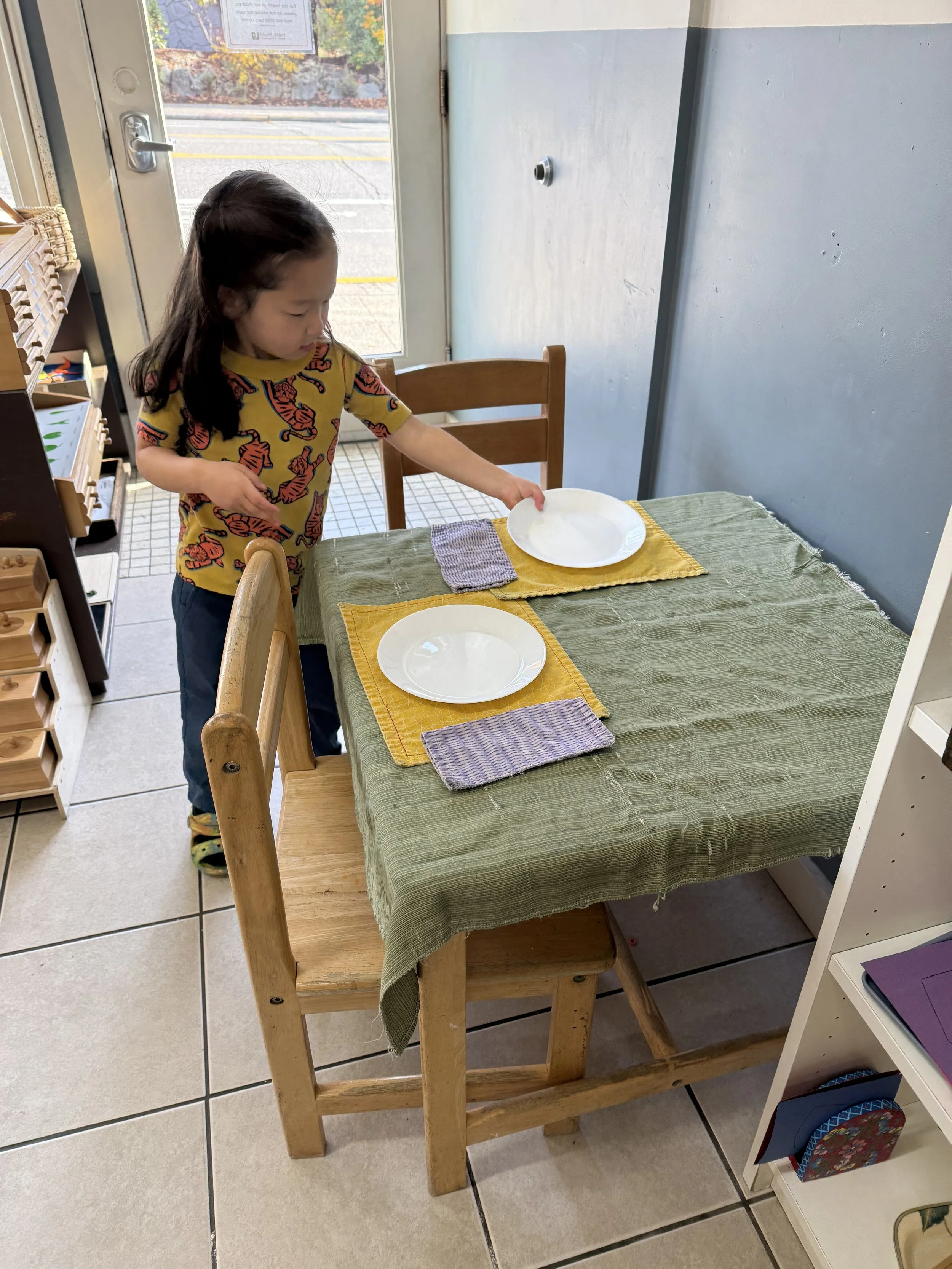
Practical Life: Setting a Table
“When a child is given a little leeway, he will at once shout, ’I want to do it!’ But in our schools, which have an environment adapted to children’s needs, they say, ‘Help me to do it alone.” – Dr. Maria Montessori, The Secret of Childhood
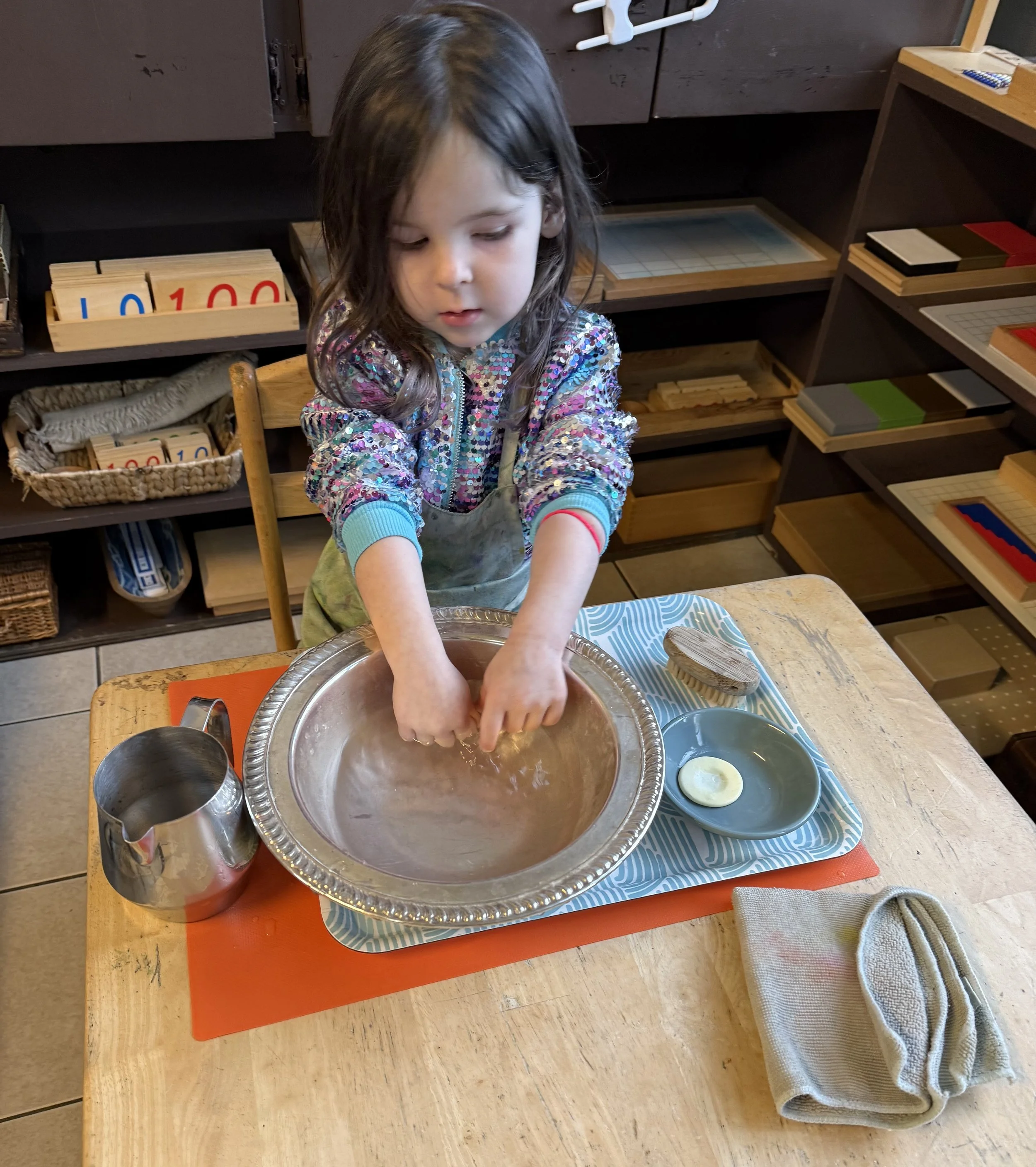
Practical Life: Washing Hands
“The only true freedom for an individual is to have the opportunity to act independently. There is no such thing as an individual until a person can act by himself. The child who has never learned to work by himself, to set goals for his own acts, or to be the master of his own force of will is recognizable in the adult who lets others guide his will and feels a constant need for approval of others.” — Dr. Maria Montessori, Education and Peace
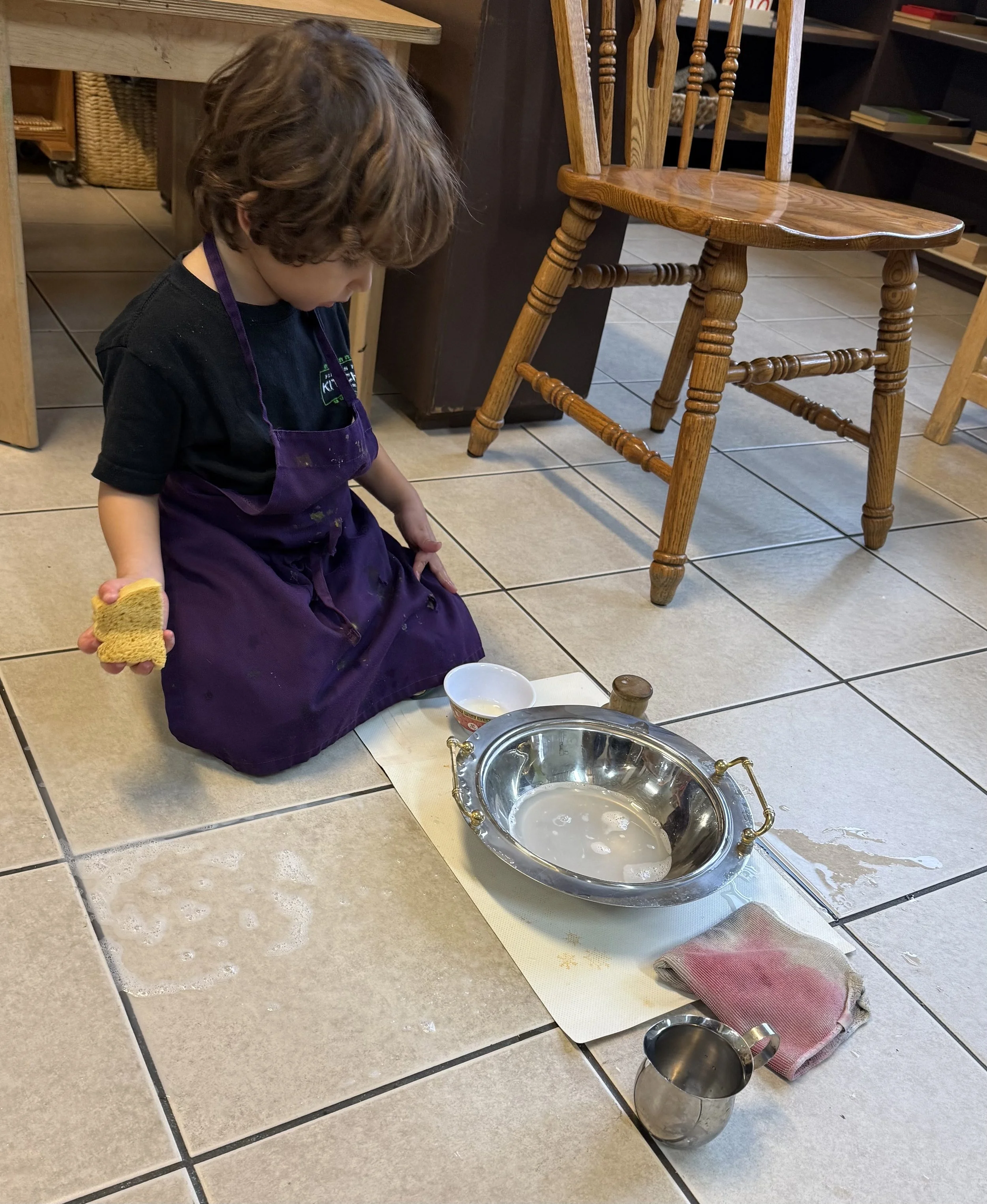
Practical Life: Scrubbing a Floor
“A child who has become master of his acts through long and repeated exercises, and who has been encouraged by the pleasant and interesting activities in which he has been engaged, is a child filled with health and joy and remarkable for his calmness and discipline.” — Dr. Maria Montessori, The Discovery of the Child
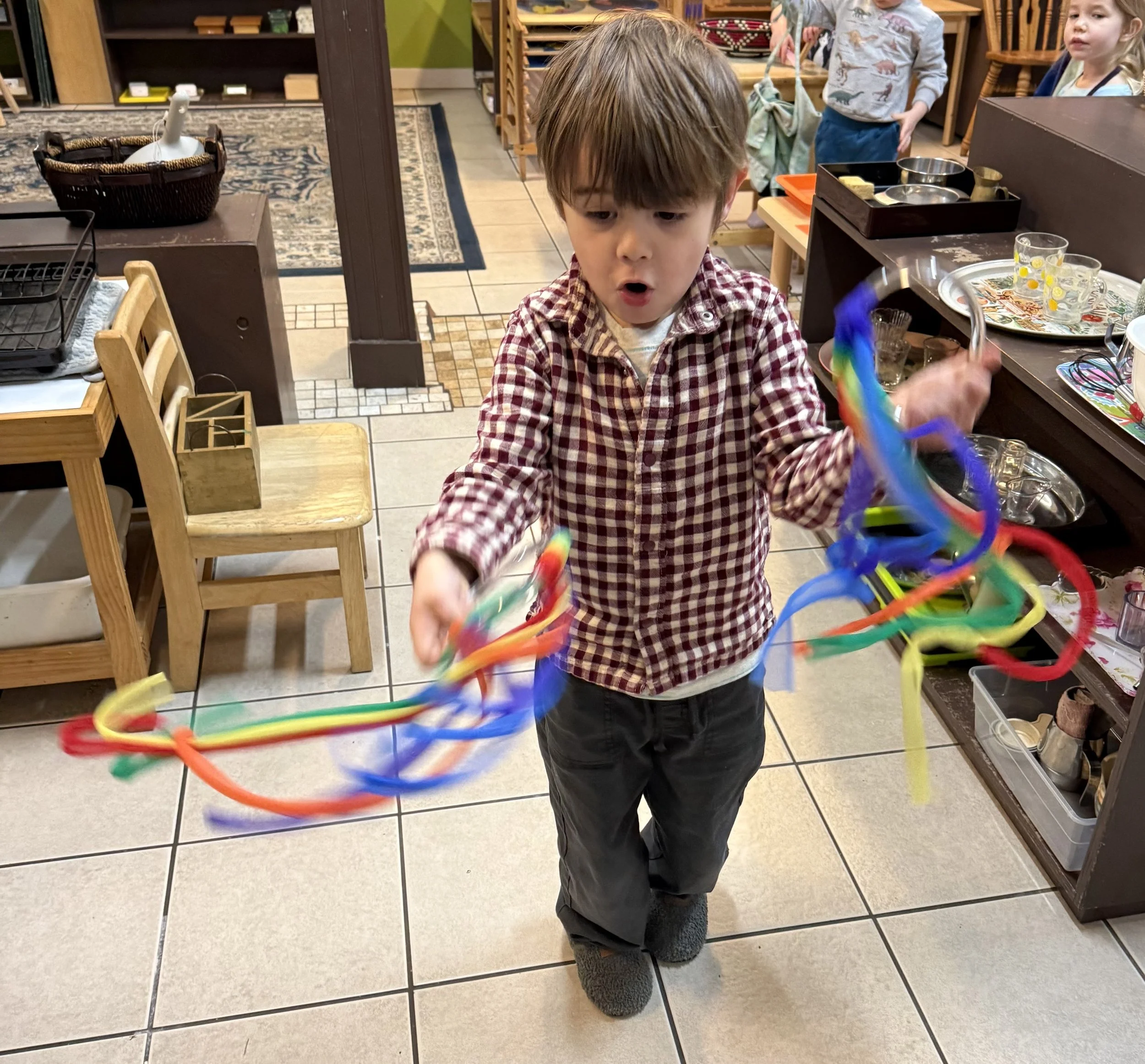
Peace shelf: Rainbow ribbons
"If teaching is to be effective with young children, it must assist independence — activities which they can perform themselves. Any child who is self-sufficient reflects in his joy and sense of achievement the image of human dignity, which is derived from a sense of independence.” – Dr. Maria Montessori